Skip to content
Many buyers ask us one common question:
Is a precast concrete prefab home the same as ICF?
The simple answer is:
No, they are different building systems.
Both systems use concrete. Both can be used for strong and long-term buildings. But the way they are designed, produced, shipped, and installed is very different.
For developers, contractors, resort owners, distributors, local builders, and overseas project buyers, understanding this difference is important before choosing a prefab home solution from China.
What Is ICF?
ICF means Insulated Concrete Form.
It is a building method that uses foam blocks or foam panels as permanent formwork. Workers assemble the foam forms on site, then pour concrete inside the hollow space.
After the concrete hardens, the foam stays in place as insulation.
In simple words:
ICF is like building a foam mold on site, then filling it with concrete.
The final wall usually has:
- Foam insulation on both sides
- Concrete core in the middle
- Exterior finish outside
- Interior finish inside
ICF is often used for walls, especially in houses that need good insulation and strong wall performance.
What Is a Precast Concrete Prefab Home?
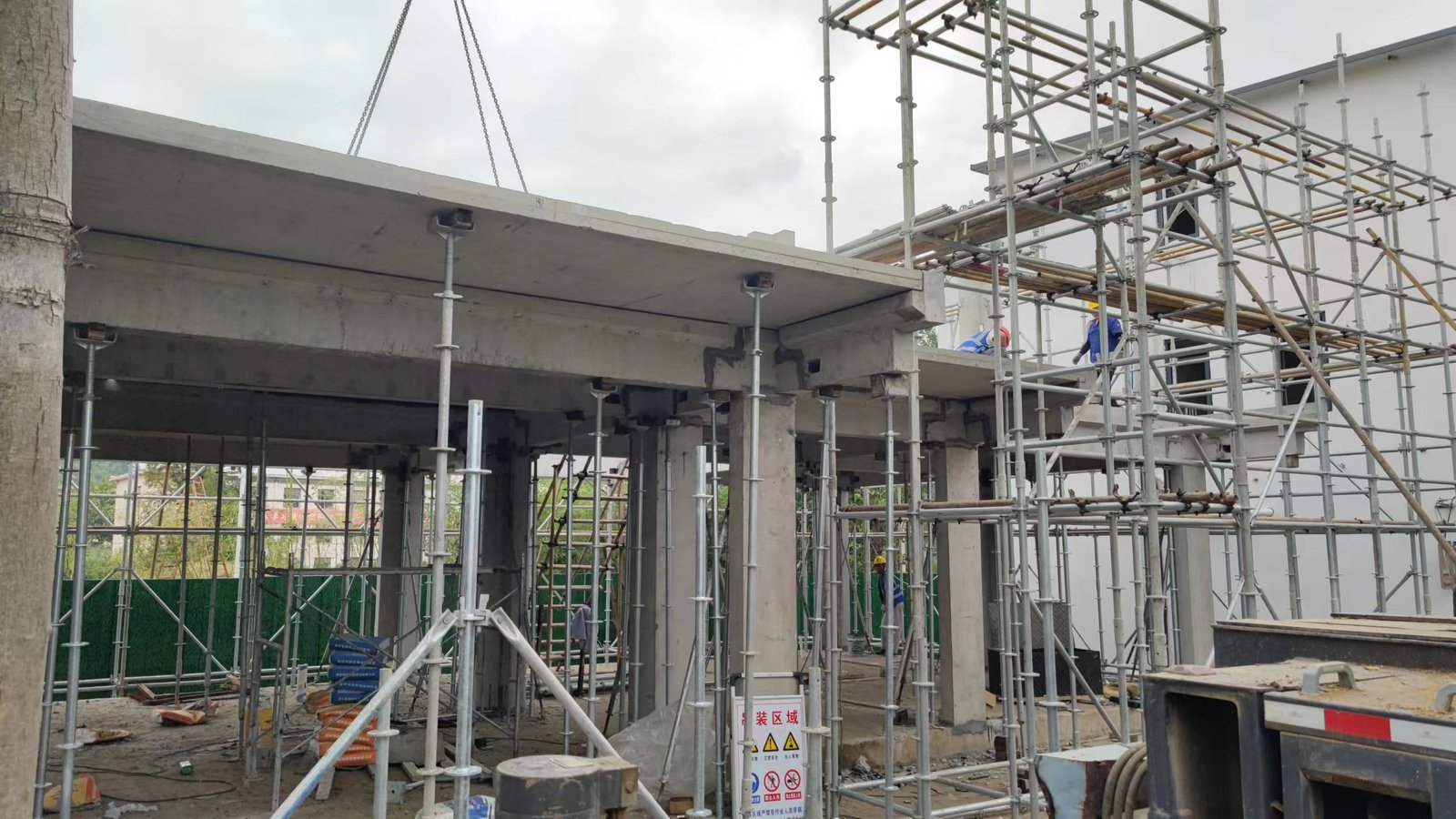
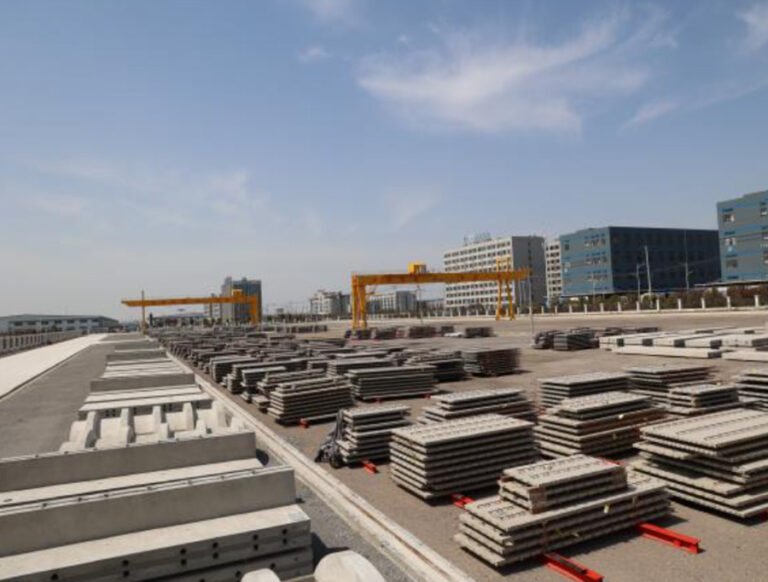
A precast concrete prefab home uses concrete components that are made in a factory before they arrive at the project site.
These components can include:
- Precast concrete columns
- Precast concrete beams
- Precast concrete floor slabs
- Precast balcony panels
- Stair components
- Wall systems
- Roof components
- Dry connectors
- Interior dry-finish components
At SY home, we use a precast concrete prefab building system with patented dry-connection technology.
In simple words:
We make the main concrete parts in the factory, ship them to the site, and assemble them with a planned connection system.
This is different from ICF because the main concrete structure is not poured into foam forms on site. More work is completed before delivery.
Quick Comparison: ICF vs Precast Concrete Prefab Homes
| Item | ICF | SY home Precast Concrete Prefab System |
|---|---|---|
| Full name | Insulated Concrete Form | Precast concrete prefab building system |
| Main method | Foam forms are assembled on site, then filled with concrete | Concrete components are made in factory, then assembled on site |
| Site work | More on-site concrete pouring | Less wet work on site |
| Main structure | Cast-in-place concrete wall inside foam forms | Factory-made reinforced concrete frame and components |
| Factory production | Foam forms are factory-made, but concrete wall is formed on site | Main structural components are factory-made |
| Installation logic | Build formwork, add rebar, pour concrete | Lift, position, align, and connect components |
| Quality control | Concrete quality depends more on site pouring | Component quality is easier to control in factory |
| Insulation | Foam form provides insulation | Insulation depends on selected wall, roof, and facade system |
| Shipping | Foam forms are light and easy to ship | Concrete components are heavier and need planned loading |
| Best for | Insulated concrete wall construction | Villas, resorts, rural homes, ADU projects, and project-based prefab construction |
The Biggest Difference: Where the Concrete Work Happens
The biggest difference is simple:
ICF concrete is mainly poured on site.
Precast concrete prefab components are mainly produced in the factory.
This affects the whole project.
With ICF, the site team still needs to:
- Assemble foam blocks or panels
- Place reinforcement
- Pour concrete
- Control concrete quality
- Wait for curing
- Manage site work carefully
- Finish both sides of the wall
With our precast concrete prefab system, more work is completed in the factory before shipping.
The site team mainly focuses on:
- Foundation preparation
- Component unloading
- Lifting
- Positioning
- Dry connection
- Wall and roof installation
- Interior finishing
- Final inspection
For overseas projects, this difference matters because local labor, site management, weather, and installation experience can strongly affect the final project result.
ICF Is Mainly a Wall System
ICF is mainly used for building walls.
It creates an insulated concrete wall by using foam forms and on-site concrete pouring.
This can be very useful for some projects, especially where energy efficiency and wall insulation are top priorities.
But ICF does not automatically solve the full prefab building process.
You still need to plan:
- Foundation
- Floors
- Roof
- Doors and windows
- Interior partitions
- Bathroom
- Kitchen
- MEP systems
- Exterior finish
- Local labor
- Site concrete pouring
So, ICF is more like a wall construction method.
Our Precast Concrete Prefab System Is a Building System
SY home’s system is not only about one wall material.
We provide a more complete prefab home solution.
Our system can include:
- Precast concrete frame
- Dry-connection structure
- ALC wall panels
- Exterior wall options
- Light steel roof system
- Dry floor system
- Integrated kitchen
- Integrated bathroom
- Optional solar roof and energy storage
- Component numbering
- Packing plan
- Installation guidance
This is important for developers, contractors, resort owners, distributors, local builders, and overseas project buyers who need a complete project solution, not just wall materials.
Dry Connection vs On-Site Concrete Pouring
This is another important difference.
ICF still depends on on-site concrete pouring.
Our system uses dry-connection technology for key structural parts.
Dry connection means building components are connected mainly through mechanical methods, such as connectors, brackets, bolts, embedded parts, or engineered connection systems.
A simple comparison:
ICF is like building a mold and pouring concrete into it.
Dry-connection precast is like assembling factory-made building parts with engineered joints.
Dry connection helps reduce:
- Heavy wet work
- Waiting time
- Site labor uncertainty
- Weather-related delays
- Construction waste
- Site mess
- Repeated manual formwork
- Installation confusion
This is why dry connection is useful for overseas prefab home projects.
Quality Control Difference
Quality control is one of the main reasons buyers compare these two systems.
With ICF, the foam forms may be factory-made, but the concrete wall is still formed on site.
That means the final quality depends on:
- Site workers
- Concrete pouring quality
- Reinforcement placement
- Weather
- Vibration and compaction
- Curing condition
- Site supervision
With precast concrete prefab homes, the main concrete components are produced in a factory.
This helps us control:
- Mold accuracy
- Reinforcement position
- Embedded parts
- Connector positions
- Component dimensions
- Surface quality
- Curing process
- Component numbering
- Packing and loading
For repeat projects, this is very important.
If you are building multiple villas, resort homes, ADU units, or rural housing units, factory-controlled production can help keep quality more consistent.
Installation Difference
ICF installation is closer to traditional construction.
The site team needs to build the forms, place reinforcement, pour concrete, and complete the wall system.
Precast concrete prefab installation is closer to assembly.
The local team needs to lift components, align them, connect them, and follow the installation drawings.
| Installation Point | ICF | Precast Concrete Prefab Home |
|---|---|---|
| Main site work | Form assembly and concrete pouring | Component lifting and connection |
| Wet work | More | Less |
| Equipment | Concrete pump, tools, formwork support | Crane, lifting tools, installation tools |
| Worker skill | Concrete pouring and wall construction | Assembly, lifting, alignment, connection |
| Waiting time | More curing-related waiting | Less wet-work waiting |
| Installation documents | Construction drawings | Component drawings, numbering, installation guide |
For overseas buyers, the installation method should match the local team’s ability.
If local workers are not experienced with ICF, site quality may vary.
If local workers receive clear component numbers, drawings, and guidance, a precast prefab system can be easier to organize.
Insulation Difference
ICF has a clear insulation advantage because foam forms stay on both sides of the concrete wall.
This makes ICF attractive in markets where thermal insulation is very important.
Precast concrete prefab homes can also achieve good insulation, but the insulation is designed through the whole wall, roof, window, and facade system.
At SY home, we can support different wall and exterior solutions, such as:
- ALC wall panels
- Insulated decorative exterior panels
- Exterior insulation systems
- Roof insulation
- Better sealing details
- Window and door planning
- Optional solar roof systems
So the key question is not only:
Does the system have insulation?
The better question is:
How is the whole building envelope designed?
The building envelope includes walls, roof, windows, doors, insulation, and sealing details.
Shipping Difference
ICF foam forms are light, so shipping can be easier and cheaper.
Precast concrete components are heavier, so shipping needs better planning.
For precast prefab homes, we need to consider:
- Component size
- Component weight
- Container loading
- Protection method
- Lifting points
- Packing sequence
- Component numbers
- Unloading plan
- Site crane arrangement
This is why buyers should not compare product price only.
You should compare the full project process, including shipping, site preparation, installation, and long-term use.
For developers and distributors, heavier components may mean more planning, but they can also provide a more solid and permanent building feeling.
Cost Difference
ICF and precast concrete prefab homes have different cost structures.
ICF cost may include:
- Foam forms
- Reinforcement
- On-site concrete
- Concrete pump
- Site labor
- Wall finishing
- Local tools and equipment
- Construction supervision
Precast concrete prefab home cost may include:
- Factory-made concrete components
- Connectors
- Wall panels
- Roof system
- Packing
- Shipping
- Crane and lifting
- Installation guidance
- Local foundation
- Local finishing
A lower material cost does not always mean a lower total project cost.
For project buyers, the real cost should include:
- Product cost
- Shipping cost
- Local labor
- Equipment
- Installation time
- Rework risk
- Maintenance
- Project delay risk
- Final building value
Which System Is Faster?
It depends on the project.
ICF can be efficient when the local team is experienced, the site is well prepared, and concrete work is easy to manage.
Precast concrete prefab homes can be faster when the components are produced in advance and the site team follows a clear installation process.
With our dry-connection system, the goal is to reduce heavy wet work and shorten the on-site assembly process.
For projects such as villas, resorts, rural housing, ADU units, and repeatable prefab home developments, this can help improve project delivery.
Which System Feels More Like a Permanent Home?
Both systems can create permanent buildings.
ICF creates strong insulated concrete walls.
Precast concrete prefab homes create a solid structure through factory-made concrete components and a planned building system.
For many buyers, precast concrete prefab homes feel more like an industrialized version of traditional concrete construction.
They are especially suitable when the project needs:
- Stronger building image
- Solid structure
- Factory-made component quality
- Cleaner installation
- Repeatable design
- Faster on-site assembly
- Better project control
Which System Is Better for Overseas Projects?
There is no one answer for every buyer.
ICF may be suitable if:
- Your local team understands ICF
- You want strong insulated walls
- Site concrete pouring is easy to manage
- Local concrete supply is stable
- Local codes are familiar with ICF
- You already have ICF contractors
SY home’s precast concrete prefab system may be suitable if:
- You want factory-made concrete components
- You want less wet work on site
- You need a complete prefab home solution
- You want a stronger structure than light steel or container homes
- You need repeatable villa, resort, or ADU projects
- You want component numbering and installation guidance
- You want to reduce site construction uncertainty
For overseas developers, contractors, distributors, and local builders, the better choice depends on your local installation ability, project type, budget, shipping plan, and building requirements.
Common Buyer Misunderstanding
Some buyers hear “concrete prefab home” and think it must be the same as ICF.
This is not correct.
ICF uses foam forms and on-site concrete pouring.
Precast concrete prefab homes use factory-made concrete components and on-site assembly.
They both use concrete, but they are different systems.
A simple example:
ICF is like bringing an empty mold to the site and filling it there.
Precast concrete prefab is like bringing finished structural parts to the site and assembling them.
Questions to Ask Before Choosing ICF or Precast Concrete Prefab
Before deciding, ask these questions:
- Do I want on-site concrete pouring or factory-made components?
- Does my local team understand ICF?
- Do I have a reliable local concrete supplier?
- Do I have lifting equipment for precast components?
- Is shipping cost a major concern?
- Is insulation the top priority?
- Is fast assembly the top priority?
- Do I need repeatable homes for a development project?
- Do I need full project support from one supplier?
- Do I need installation guidance for local workers?
- What will the total project cost be, not only product cost?
- Which system is easier to approve locally?
These questions can help you choose the right system.
Why SY home Uses Precast Concrete Prefab Technology
At SY home, we focus on precast concrete prefab homes because many buyers need a stronger and more project-ready building system.
We support:
- Developers building villa or housing projects
- Resort owners building guest houses or homestays
- Contractors looking for faster project delivery
- Distributors looking for repeatable prefab home products
- Local builders who need installation support
- Overseas project buyers comparing stronger prefab systems
Our system is designed around:
- Precast concrete frame structure
- Patented dry-connection technology
- Factory-made components
- ALC wall panel options
- Flexible exterior wall design
- Light steel roof options
- Dry interior finishing
- Integrated kitchen and bathroom options
- Optional solar roof and energy storage
- Packing and installation support
Our goal is to help buyers build prefab homes that are stronger, cleaner, faster to install, and easier to manage.
ICF vs SY home Precast Concrete Prefab System: Which Should You Choose?
Choose ICF if your project needs:
- Strong insulated concrete walls
- Local concrete pouring
- Local ICF contractor experience
- Foam-form wall construction
- A wall-focused construction method
Choose SY home’s precast concrete prefab system if your project needs:
- Factory-made concrete components
- Less wet work on site
- Stronger prefab structure than light steel or container homes
- Complete prefab home solution
- Dry-connection technology
- Repeatable project delivery
- Installation support for local teams
- Villa, resort, ADU, rural housing, or workforce housing applications
The right choice depends on your project.
But they are not the same system.
Conclusion
Precast concrete prefab homes and ICF are both concrete-related building methods, but they are different.
ICF uses foam forms assembled on site, then concrete is poured inside.
SY home’s precast concrete prefab system uses factory-made concrete components that are shipped to the site and assembled with dry-connection technology.
ICF is mainly a wall construction method.
Our precast concrete prefab system is a complete building solution for villas, resorts, rural housing, ADU projects, workforce housing, and overseas prefab construction.
For developers, contractors, resort owners, distributors, local builders, and overseas project buyers, the key is to compare the full project process: structure, insulation, production, shipping, installation, labor, quality control, and long-term value.
SY Home - Precast Concrete Prefab Homes Manufacturer in China
Compare ICF and Precast Concrete Prefab Homes with SY home
Send us your project location, building size, quantity, layout, and target use. Our team will help you evaluate whether SY home’s precast concrete prefab system is suitable for your project.